


In written exams, you can think, cross out, and start over. In an oral exam, you can't. You sit opposite the examiner, the question comes – and you have to deliver immediately. No wonder oral exams are the most stressful type of exam for many.
Whether at university, IHK, Abitur, or vocational training – with the right preparation and a few targeted strategies, you can approach oral exams much more calmly. In this article, you will learn how to prepare optimally, what to do in case of a blackout, and what aids are available. If you generally struggle with exam anxiety, you will find a detailed guide there.
Key takeaways
- Oral exams usually last 15–30 minutes and test not only knowledge but also communication skills
- The best preparation: Practice out loud – alone, with friends, or by recording
- Examiners often evaluate the thought process, not just the perfect answer
- In case of a blackout: Ask for a break, have the question rephrased, think aloud
- There are discreet technical aids that can support you in oral exams

How does an oral exam work?
The procedure differs depending on the context, but the basic principle is always the same: You are asked questions and have to answer them orally – in real-time, without looking anything up.
At university, you usually sit opposite an examiner and an assessor. The exam typically lasts 15–30 minutes and covers the core topics of the lecture. Examiners often start with a broad question and then go into depth.
At the IHK (Chamber of Commerce and Industry), the oral exam is often part of the final examination or an oral supplementary examination if the written exam was narrowly failed. This often involves case studies and practical scenarios.
In the Abitur (German high school diploma), oral exams are part of the compulsory or elective exams. You usually get a preparation time (20–30 minutes) before presenting to the committee and answering questions.
Oral Exam Preparation – How to Do It Right
The biggest mistake when preparing for an oral exam: reading silently at your desk. Oral exams require you to articulate your knowledge – and you need to practice that.
Explain aloud instead of reading silently
Pick a topic and explain it aloud – as if you were describing it to a friend. Do you notice yourself stumbling? That's exactly where the gap is. This method immediately shows you where you are confident and where you are not.
Conduct practice conversations
Ask someone to quiz you. Ideally, someone who doesn't know the topic – because if that person understands your explanation, so will the examiner. Alternatively: Record yourself with your phone and listen to it.
Key statements instead of details
Examiners don't expect memorized definitions. They want to see that you understand connections and can transfer knowledge. Focus on the big picture – not footnotes.
You don't have to be overdressed – but well-groomed. Business casual is usually the right attire: a clean shirt or blouse, no sweatpants. A neat appearance signals respect and is often unconsciously perceived positively.
Tips for the Oral Exam – What Really Helps
In addition to content preparation, there are strategies that will help you during the exam itself:
Think aloud: Examiners can only evaluate what they hear. If you're thinking, say it: "I'm just wondering if that's more related to X or Y." This shows thought process – and gives you time.
Asking questions is allowed: "Could you rephrase the question?" or "Do you mean specifically...?" This is not a sign of weakness, but of precision.
Use pauses: Three seconds of silence feel like an eternity to you – not to the examiner. Take a short breath before you answer. A structured answer after a brief pause is better than hurried stammering.
Be honest: If you don't know something, say it directly: "I can't say anything about that spontaneously, but I know it's related to topic X." Examiners respect honesty more than obvious guessing.
If suddenly everything is gone: Don't panic. Tell the examiner that you've lost your train of thought and ask for a short break or a repetition of the question. This happens more often than you think – and good examiners know that.

Discreet Aids for Oral Exams
Oral exams have a peculiarity: Unlike written exams, you have no way to hide cheat sheets under the table. However, there are technical solutions specifically developed for oral exam situations.
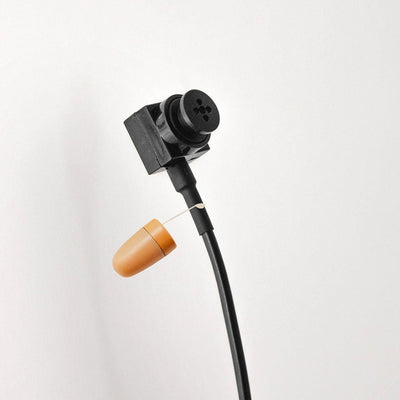
Invisible headphones are so small that they are practically undetectable in the ear. A trusted person listens to the questions via a camera or an open call and discreetly whispers the answers to you. For oral exams, this is the most effective method.
The combination of a mini-camera and invisible headphones is often used as a set: The camera transmits the image to an assistant who monitors the situation and provides real-time support. This works both at university and for IHK exams.
Prepared for Every Question
Discreet support specially developed for oral exam situations
Learn moreConclusion: Oral Exams Are Doable
- Practice oral exams aloud – explaining trains better than reading
- Practice conversations and recordings show you your actual gaps
- During the exam: Think aloud, ask questions, use pauses
- In case of a blackout: Communicate honestly, have the question repeated
- There are discreet technical aids for oral exams
- The combination of invisible headphones and a mini-camera is the most effective solution
An oral exam is not an interrogation – it's a professional discussion. Those who prepare, practice aloud, and know the right strategies in an emergency will enter much calmer. And those who want additional security now have discreet options that were unthinkable just a few years ago.
"You don't have to know everything – you just have to be able to explain convincingly what you do know."